
Online vs In-Person Executive Coaching
Online and in-person executive coaching both work well when the conditions are right; the difference lies mostly in practicalities. In-person sessions suit leaders who think better away from screens or are working on presence and body language. Online sessions suit full diaries, frequent travel and leaders across the GCC. Choose the format that lets you attend consistently and speak freely, and mix the two if that helps.
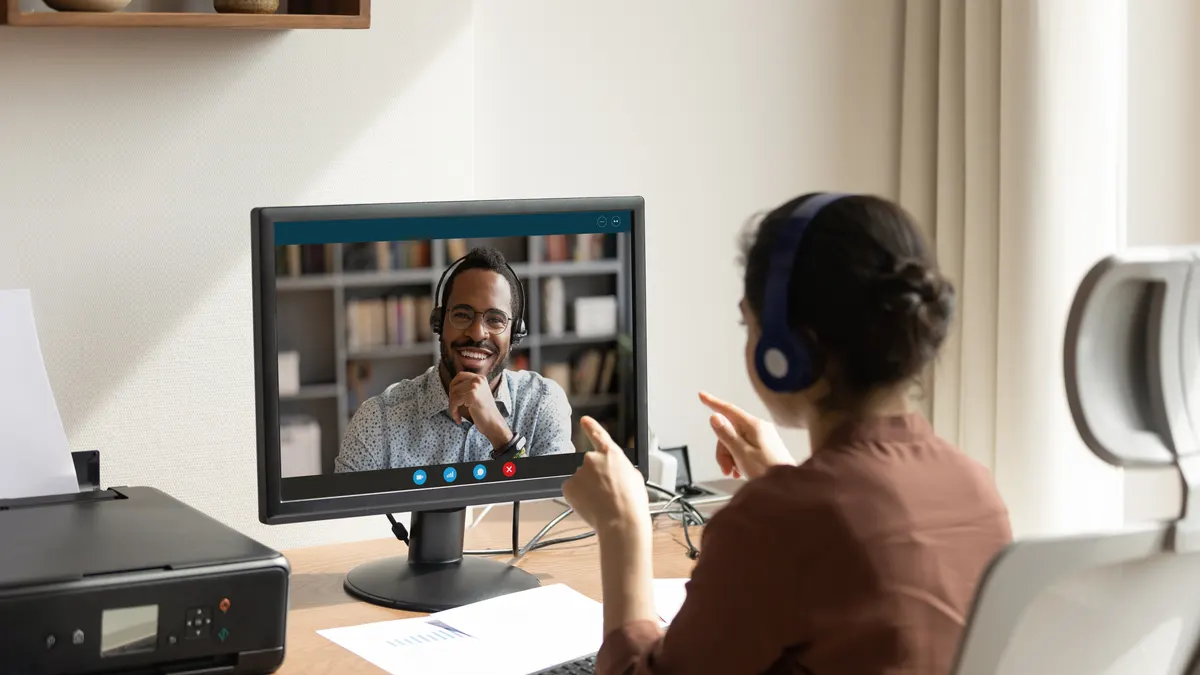
Before video calls became normal at work, most executive coaching happened face to face. Today many leaders never meet their coach in a room, and others would not consider anything else.
Neither choice is automatically better. This guide helps you work out which one suits you, and how to get the most from it.
The coaching itself stays the same in either format
What makes executive coaching effective does not depend on the room. The questions, the confidentiality, the goals, the tools and the rhythm of sessions are the same whether you sit across a table or appear on a screen.
What changes is the experience around the conversation: travel time, privacy, how easily you switch off from work, and how much of your body language the coach can see. Those practical factors are what should guide your choice between online and in-person executive coaching.
How online and in-person coaching compare in practice
| Factor | Online | In person |
|---|---|---|
| Time cost | No travel; sessions fit between meetings | Travel time on both sides |
| Consistency | Easier to keep during travel and busy periods | More likely to be rescheduled when diaries tighten |
| Mental space | Risk of carrying work in from the previous call | Leaving the office creates a natural break |
| Non-verbal cues | Face and voice visible; posture and movement less so | Full body language visible to both |
| Privacy | Depends on having a private room | Held in a neutral, private space |
| Geography | Works across the GCC and beyond | Limited to where coach and client can meet |
| Experiential work | Possible, with some adaptation | Easier for role-play and practising presence |
When in-person coaching is worth the journey
- You find it hard to switch off from work when you are at your desk or at home.
- You are working on executive presence, posture or how you hold a room.
- You want to rehearse a difficult conversation or presentation in a realistic setting.
- Your office and home both lack a private space where you cannot be overheard.
- You simply think more freely face to face, and you can protect the travel time.
When online coaching is the better choice
- Your diary is full and travel time would push sessions out of your week.
- You travel often, between GCC markets or further, and want continuity wherever you are.
- You are based in a different country from the coach you want to work with.
- Your schedule shifts, for example around Ramadan working hours, and you need flexibility.
- You lead a hybrid or remote team and want to work on your presence on video as part of the coaching.
Set up online sessions so they feel like a room, not another call
Most of the downsides of online coaching come from treating it like any other video meeting. A few habits remove them.
Find a private space
Choose a room where you cannot be overheard, with the door closed. If that is impossible at work, take the session from home or a parked car.
Leave a buffer before and after
Give yourself ten minutes before to arrive mentally and ten minutes after to write notes, rather than joining straight from another call.
Close everything else
Turn off notifications, close email and put your phone out of reach. A coaching hour with half your attention is half a session.
Keep your camera on
Your coach reads your expression as well as your words. Use headphones so you can speak freely.
Have a backup
Agree in advance what happens if the connection drops, such as switching to a phone call.
A blended rhythm suits many leaders
You do not have to choose one format for the whole engagement. A common pattern is to meet in person for the first session and at key review points, then continue online for regular sessions. Another is to switch formats around travel and busy seasons, keeping the same rhythm whatever the location.
What matters most is consistency. Weekly or fortnightly sessions held reliably online usually achieve more than in-person sessions that keep being postponed. For guidance on rhythm, see how often executive coaching sessions happen.
Mistakes to avoid in either format
- Joining online sessions from an open-plan office. If you cannot speak freely, you will edit what you say, and the coaching suffers.
- Choosing in-person sessions you cannot sustain. A format that looks better on paper but leads to cancellations costs more than it gives.
- Treating online sessions as optional. Moving a video session at short notice is easy, which is exactly why it needs protecting.
- Assuming presence work must be in person. Many leaders now need presence on screen as much as in a room. The guide to executive presence on video calls covers that skill.
Example: a director in Riyadh working with a coach in Manama
Imagine a director based in Riyadh who wants coaching in Arabic before taking on a regional role. They choose a coach based in Manama, meet in person for a first session during a business trip to Bahrain, then move to fortnightly online sessions.
During a month of heavy travel, sessions continue from hotel rooms. Before a major board presentation, they arrange one in-person session to rehearse. Over the engagement, almost every planned session takes place, which would have been difficult if every meeting required travel.
This example is hypothetical. It shows how a blended approach can protect continuity without losing the benefits of meeting face to face.
How I offer online and in-person coaching
I coach in person in Manama and online for leaders across Bahrain and the GCC, in Arabic and English, and you can combine the two. If you are in Bahrain, executive coaching in Bahrain explains the in-person option; wherever you are, online executive coaching explains how remote sessions work. Either way, we can decide the format together in a free 30-minute discovery call.
Rula Husseini is an Executive Leadership & Mindset Coach (ICF PCC) based in Manama, Bahrain, with 26+ years in leadership, HR and talent development and 4,500+ coaching hours. She coaches executives, emerging leaders and teams in Arabic and English, in person and online.
Credentials and training →Frequently asked questions
Is online executive coaching as effective as in-person coaching?
It can be, when you have privacy, a stable connection and protected time. The quality of the coaching relationship matters more than the format. Many leaders find online sessions easier to keep consistent, which supports progress.
Can I switch between online and in-person sessions during an engagement?
Yes, if your coach offers both. Agree a default format and how much notice you need to switch. Blending formats around travel and busy periods is common.
Do I need special software for online coaching?
Usually not. Most coaches use widely available video platforms. Ask in advance which one, test it once, and use headphones for privacy and sound quality.
Is online coaching less confidential than meeting in person?
The coach's confidentiality commitment is the same. The main risk is on your side, from being overheard. Choose a private space and avoid shared or public networks where you can.
Related
Online Executive Coaching
Online executive coaching by video for leaders across Bahrain and the GCC. The same depth and confidentiality as in person, scheduled around your week.
Executive Coaching in Bahrain
Executive coaching in Bahrain for leaders and teams: in person in Manama or online, in Arabic or English. Start with a free 30-minute discovery call.
How Often Are Executive Coaching Sessions?
Executive coaching sessions usually run weekly or every two weeks. How to choose the rhythm, why the gap matters and how to adjust it around busy periods.
Executive Presence on Video Calls
Executive presence on video calls: set up camera, light and sound, speak for the screen, hold attention when not chairing, and drop habits that drain you.
Executive Coaching in Arabic and English
Executive coaching in Arabic and English for Gulf leaders. Think in the language that fits, switch mid-session, and keep the cultural nuance intact.
Online, in person, or both?
Book a free 30-minute discovery call and we can choose the format that fits your diary and your goals.