
Executive Coaching in Arabic and English
Executive coaching in Arabic and English means you can think, reflect and speak in whichever language fits the moment, and switch between them freely. I coach leaders across Bahrain and the GCC in both languages, in person in Manama and online. It suits bilingual professionals whose working life runs in English but whose values, family context and deepest thinking often live in Arabic.
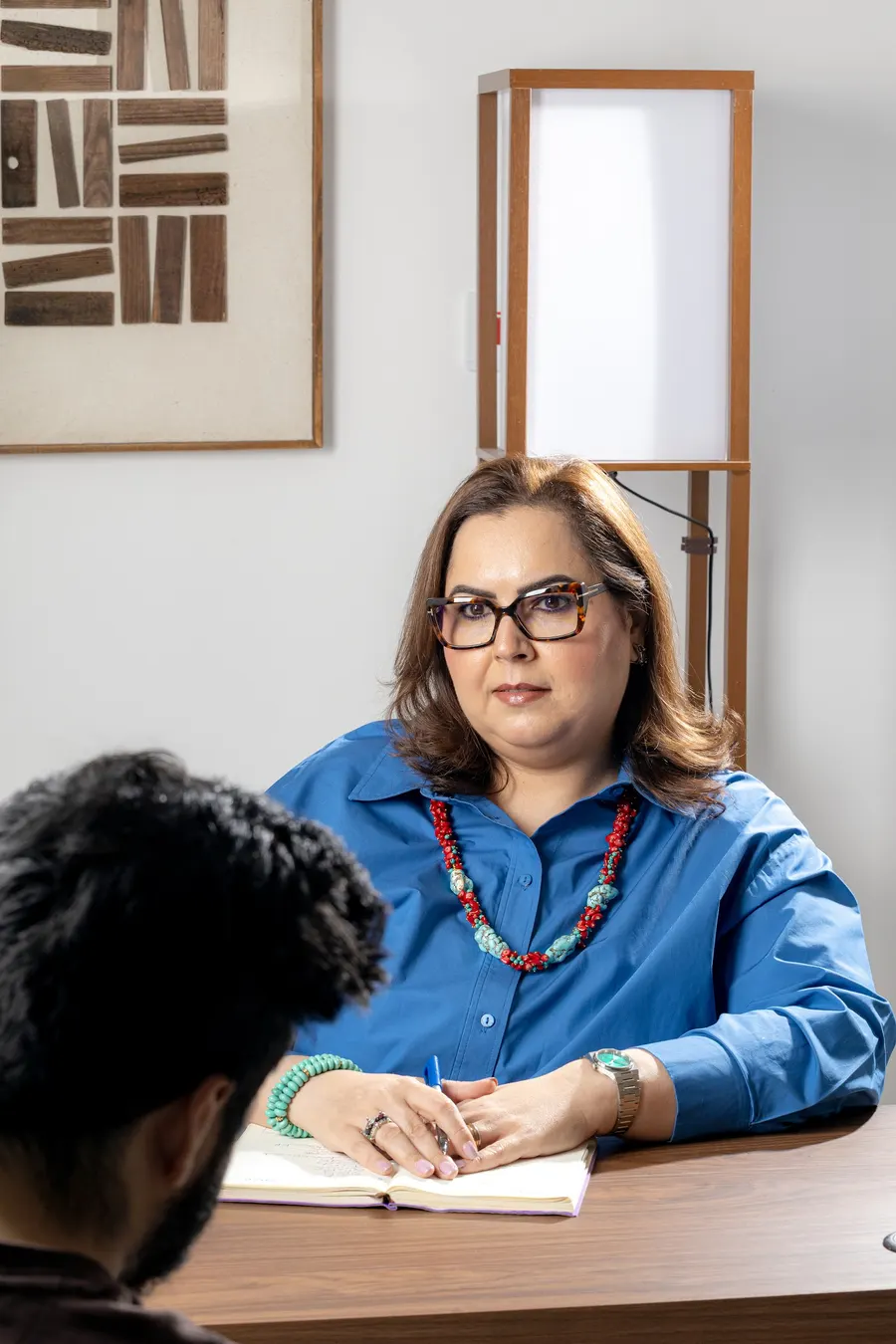
Many leaders in the Gulf work all day in English, report to boards in English and write strategy in English. Then they go home and live in Arabic. Coaching that happens in only one of those languages can miss half the person.
I offer every client the choice. Some stay in English throughout, some in Arabic, and many move between the two without noticing.
Language shapes what you are able to say about yourself
The language you use affects what you can reach. Strategy, metrics and corporate vocabulary often come more easily in English, because that is where you learned them. Feelings, values, family expectations and the stories you grew up with often come more easily in Arabic.
Bilingual coaching uses that. When a client switches language in the middle of a sentence, it is often a sign that something important has just surfaced.
When coaching in Arabic tends to help most
Equally, many clients prefer English because it keeps a helpful distance from emotionally loaded topics, or because their workplace runs in English. Both choices are valid, and you can change your mind at any point.
- You are exploring something personal, such as identity, ambition or confidence, and English feels too formal for it.
- The issue involves family, whether that is family expectations of your career or leading inside a family-owned business.
- You are preparing for a conversation that will happen in Arabic, with its own levels of formality and respect.
- You think faster in Arabic and notice that translating in your head slows you down.
- You lead Arabic-speaking teams and want to work on how your messages land in that language.
- You simply feel more yourself in Arabic.
Switching languages mid-session is part of the work, not a distraction
You do not need to choose one language for a whole engagement. In practice, sessions often move: a client describes a board meeting in English, explains what it meant to them in Arabic, then rehearses a response in whichever language the meeting will use.
I follow your lead and sometimes notice the switch aloud. A question such as “what changed when you moved into Arabic just then?” can open up more than an hour of analysis. The questions, the reflection and any notes you keep can follow whichever language serves the thinking.
Cultural nuance is easier to hold when the context is shared
Gulf workplaces carry their own layers: respect for seniority, the weight of relationships, family-owned businesses, national talent programmes and the rhythm of Ramadan working hours. A coach who understands those layers spends less time on explanation and more on the real issue.
That shared context never replaces questioning. I won’t assume I know what a situation means to you because I recognise it. But it lets us explore questions such as how to disagree respectfully with a senior figure, or how to lead peers you have known for years, without first translating the culture. For the communication side of this, see my article on cross-cultural communication for leaders.
What the first session looks like in two languages
On the free 30-minute discovery call, I ask which language you would like to begin in. Most people know straight away. Some say “both”, which is a perfectly good answer. If coaching is new to you, it may help to read what executive coaching is beforehand.
In the first session we clarify your goals, the challenges in front of you and what you want from coaching, as in any one-to-one executive coaching engagement. I pay attention to where language shifts and what it reveals. Sessions then run weekly or every two weeks, in person in Manama or online by video, with the same strict confidentiality in either language.
The same professional standards in both languages
I am an ICF Professional Certified Coach with more than 4,500 coaching hours, and the same ethical standards apply whichever language we use. My 26+ years in leadership, HR and talent development spanned financial services, FMCG, entrepreneurship and government, inside multinational organisations and in private practice.
I also co-authored, with the Bahraini leadership expert Amal Kooheji, Seen Yet Silent: Coaching Arab Women to Lead, a book about the challenges Arab women face in leadership and about coaching them to lead. Executive coaching in Arabic and English is, for me, a natural extension of that commitment to leaders in this region.
Frequently asked questions
Do I need to be fluent in both languages?
No. You can be coached entirely in English or entirely in Arabic. The option to switch is there for people who find it helpful, not a requirement.
Is a session in Arabic as rigorous as one in English?
Yes. The coaching approach, the ICF ethical standards and the depth of questioning are the same. Only the language changes, and for many clients that makes the conversation more precise, not less.
My office runs in English but my family business runs in Arabic. Can coaching cover both worlds?
Yes. That combination is common in the Gulf, and coaching can move between boardroom vocabulary and the family conversation in the same session. We work on each relationship in the language it actually lives in.
Does it matter that you are in Bahrain if I am elsewhere in the GCC?
Not for the language or the coaching. I work online with clients across the GCC, and the cultural familiarity carries across borders. If you are in Bahrain, we can also meet in person in Manama.
Is confidentiality the same when we talk about family or community matters?
Yes. Strict confidentiality covers everything you bring, and in close-knit professional and family networks that matters even more. Nothing you share leaves the session without your agreement.
Which language should I choose if I cannot decide?
Start in the one that feels easiest today. You can switch during any session, and many people find the choice settles itself within the first few conversations.
Related
Online Executive Coaching
Online executive coaching by video for leaders across Bahrain and the GCC. The same depth and confidentiality as in person, scheduled around your week.
Cross-Cultural Communication for Leaders
Cross-cultural communication for leaders of multinational teams: five dimensions where messages get lost, how to set team norms, and Gulf guidance.
Executive Coaching for Arab Women Leaders
Executive coaching for Arab women leaders, in Arabic or English, from the co-author of Seen Yet Silent. Family, culture and ambition, held in confidence.
Leadership Coaching for Family Business Successors
Leadership coaching for family business successors: earn authority, work alongside the founder and handle family dynamics with care. Arabic or English.
ICF PCC Executive Leadership Coach in Bahrain
Coaching should meet you in the language you think in.
Book a free 30-minute discovery call, in Arabic or English, and tell me what you want to work on.