
Executive Presence Coaching
Executive presence coaching helps senior leaders hold a room: to stay composed under challenge, speak with weight and be taken seriously before they have proved anything. I work one to one, in person in Manama or online, in Arabic or English. We build presence from self-awareness rather than a script, so it holds up when the meeting goes off plan.
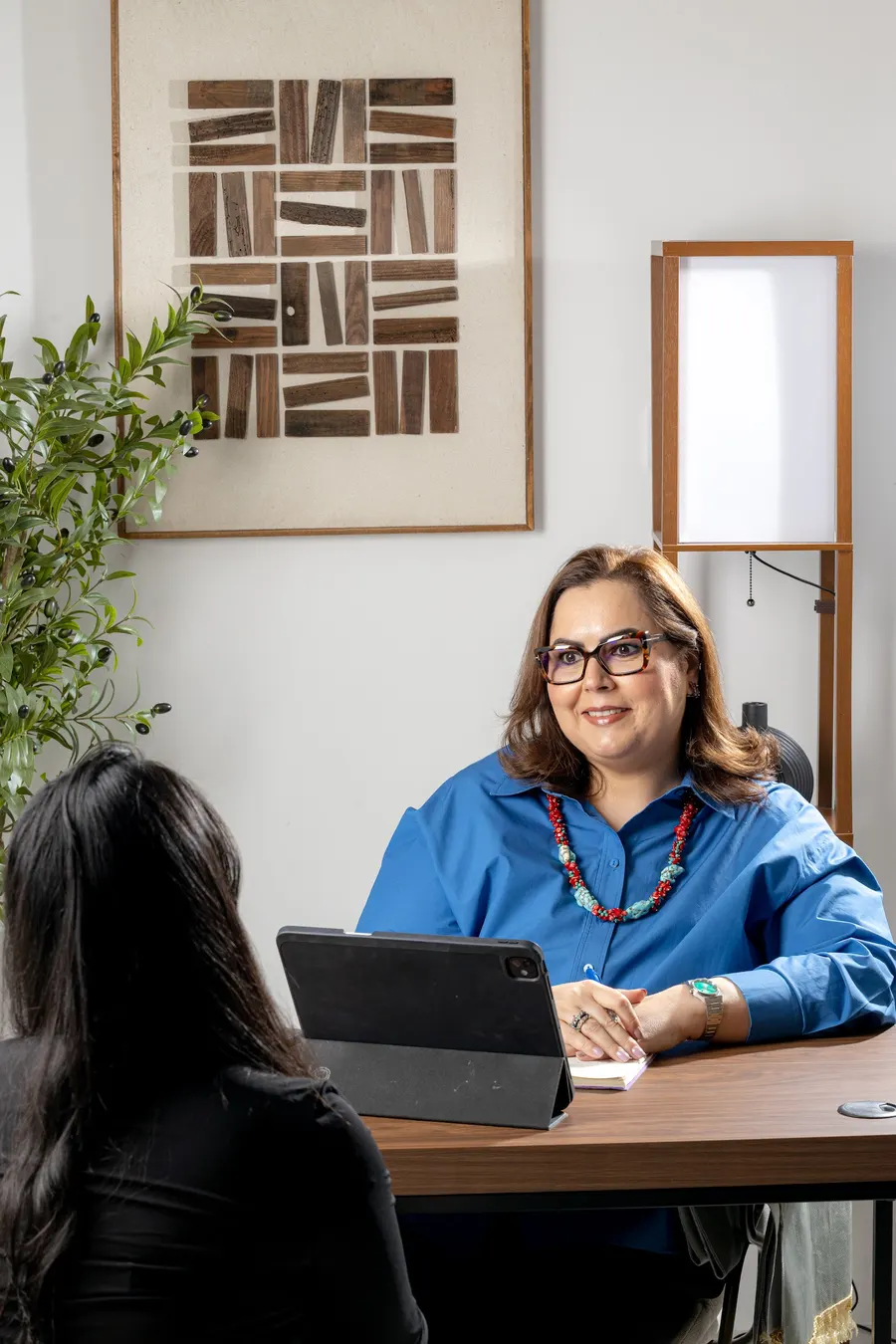
Most leaders who ask me about presence already have the expertise. What they lack is the experience of being heard the way they intend. The feedback is vague (“you need more gravitas”) and nobody explains what to do with it.
This page explains how I work on that gap, what a first session looks like, and how to tell whether executive presence coaching is the right starting point for you.
You probably need this if the feedback is about how you show up, not what you know
Presence becomes the issue when your results are strong but your influence does not match them. These are the moments leaders describe to me most often.
- You prepare thoroughly for an executive committee, then hear yourself rushing and over-explaining once the questions start.
- A peer makes the same point you made ten minutes earlier, and the room responds to them.
- You were told you are “not quite ready” for the next role, with no clear reason beyond presence.
- You go quiet when a very senior person, an older colleague or the founder of a family business enters the conversation.
- On video calls you feel invisible, and in person you feel either too careful or too forceful.
- You lead a multicultural team and are unsure which version of yourself lands with which audience.
Presence built on a script breaks under pressure
Many presence courses teach posture, pauses and power phrases. Those details have their place, but a borrowed technique tends to collapse at exactly the moment it is needed: when a board member challenges your numbers or a meeting turns tense.
Lasting presence comes from knowing what happens inside you under pressure. When you can notice the urge to justify, please or defend, you can choose a different response. Leadership isn’t built from the outside in; it grows from the inside out. That is the principle behind every piece of executive presence coaching I do.
Three things we strengthen: composure, gravitas and voice
I break presence into three working parts so we can be specific about what changes. For a fuller definition of the term itself, see what executive presence actually means.
| Part of presence | What others notice | What we work on |
|---|---|---|
| Composure | You stay steady when challenged or interrupted | Your triggers, recovery after a hard question, and calm under scrutiny |
| Gravitas | Your view carries weight and people wait for it | Clarity of position, fewer qualifiers, and the confidence to hold a silence |
| Voice | You are heard the first time, in the room and on screen | Pace, framing and when to speak; see how to speak up in executive meetings |
The first session starts with one real room
In our first session I ask you to describe a specific meeting where your presence did not land, and one where it did. We look at what was different: who was in the room, what you were telling yourself, what your body was doing and what you said first.
From there we agree two or three situations coming up in the next few weeks where you will try something new. I won’t hand you a list of rules. I ask questions until you can see your own pattern clearly, because that is what you will still have after coaching ends.
Between sessions, presence is practised in your real calendar
Choose the moment
We pick an upcoming meeting, presentation or one-to-one where presence matters.
Set one intention
For example: state your view in the first two minutes, or pause before answering a challenge.
Notice what happens
You observe your reactions and how others respond, without judging yourself.
Debrief and adjust
In the next session we review what shifted and what still pulls you back.
Why a former HR leader is useful on presence
I spent more than 26 years in leadership, HR and talent development, in financial services, FMCG, entrepreneurship and government. Talent decisions often turn on “presence”, and working in talent management showed me how senior people read it and how rarely they explain it.
I am an ICF Professional Certified Coach with more than 4,500 coaching hours, and an NLP Master Practitioner. NLP is useful here because it helps you notice how language and state shape the way you come across.
Frequently asked questions
Can someone who is naturally quiet develop executive presence?
Yes. Presence is not volume. Many quiet leaders have strong presence because they listen well and speak with intent. We build on your natural style rather than replacing it, and coaching for introverted leaders covers that angle in more depth.
Is executive presence different for women leaders?
The core work is the same, but women often face extra and contradictory expectations about how they should sound and behave. I explore this on the page about executive presence for women leaders, and in my co-authored book on coaching Arab women to lead.
Do you work on body language and voice, or only mindset?
Both, but in that order. We look at what your body and voice do under pressure, and then at the thinking underneath. Changing a habit only on the surface rarely lasts.
My company has asked me to work on presence. Will they see what we discuss?
No. Everything you share in sessions is confidential. If your employer is sponsoring the coaching, we can agree at the start what high-level goals are shared with them, and nothing beyond that leaves the room without your agreement.
Can we prepare for a specific board meeting or presentation?
Yes, and it is often a useful starting point. We use the real event as material, then look at the patterns it reveals so the benefit carries into the meetings that follow.
How often do we meet?
Sessions are usually weekly or every two weeks, in person in Manama or online. Every engagement is personalised, so we agree the rhythm on the free discovery call.
Related
Executive Presence for Women Leaders
Executive presence coaching for women leaders facing the double bind: too soft or too sharp, unheard or 'aggressive'. Arabic or English, Manama or online.
Leadership Communication Coaching
Leadership communication coaching for managers: frame messages for senior audiences, listen properly and be understood by your team. In Arabic or English.
Confidence Coaching for Leaders
Confidence coaching for leaders who doubt themselves despite strong results. Quiet the inner critic and stay steady under pressure. Online or in Manama.
Executive Presence Self-Assessment
Rate 12 everyday habits behind executive presence, from clarity to composure, and get an instant score with the one area to work on first.
Executive Presence on Video Calls
Executive presence on video calls: set up camera, light and sound, speak for the screen, hold attention when not chairing, and drop habits that drain you.
Presence is not something you perform. It is something you grow into.
Book a free 30-minute discovery call and tell me about the room you want to own.