
Imposter Syndrome Coaching
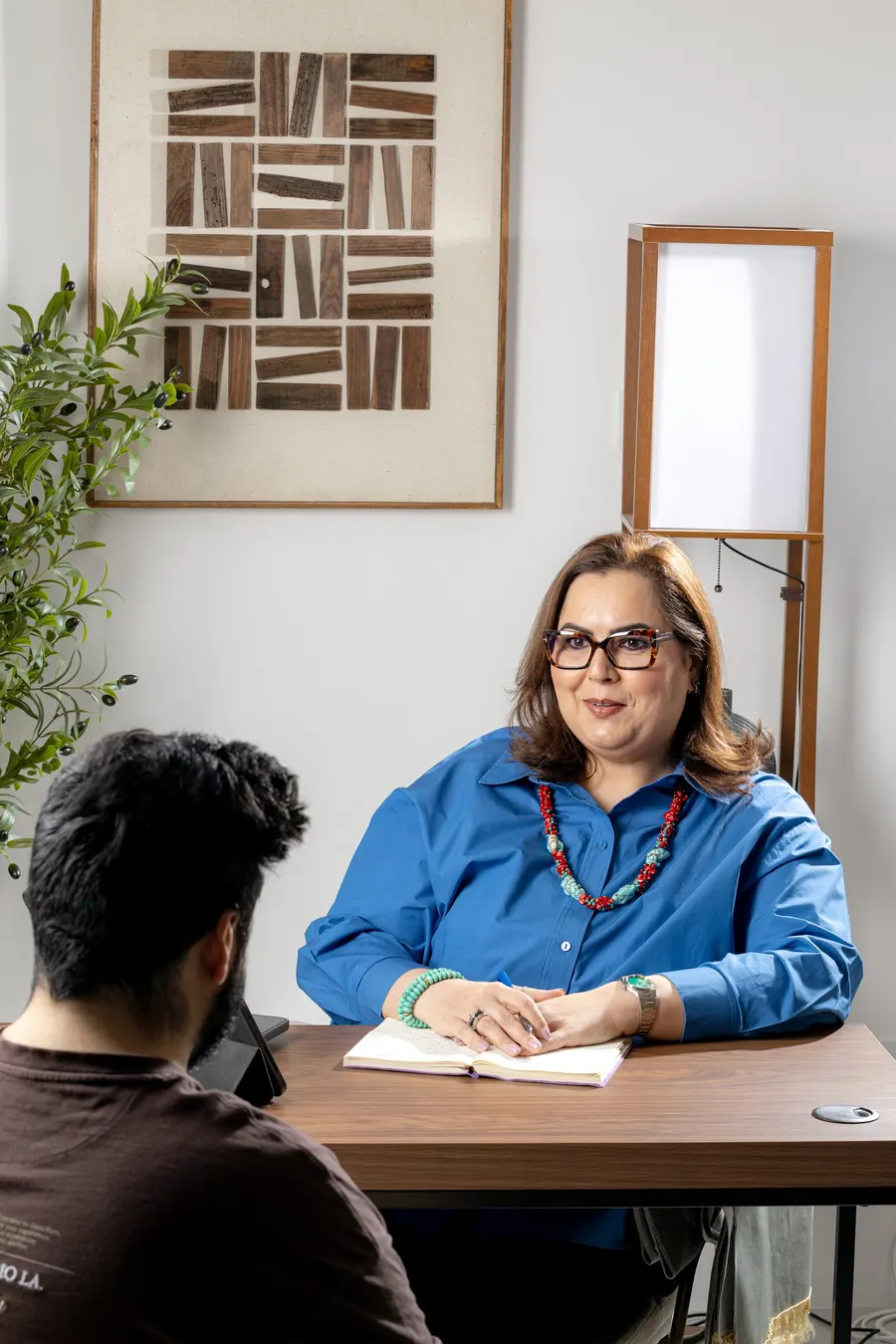
Imposter syndrome coaching is for accomplished leaders who quietly believe they do not deserve their role and will one day be exposed. We trace where that belief comes from, see what it costs you at work, and change the habits that keep it alive, such as over-preparing or deflecting credit. I coach one to one, online or in person in Manama, in Arabic or English.
If you want a self-guided approach first, my article on how to overcome imposter syndrome at work sets out practical steps. This page is about working on it with me as your coach.
It often gets louder after a promotion, not quieter
Many leaders expect imposter feelings to fade as they become more senior. In practice, each step up brings a bigger stage, more visible decisions and more people who might notice a gap. The thought “they will realise I am not good enough” simply follows you into the new role.
It can be especially strong when you are the first, the youngest or the only one: the first woman on a leadership team, the youngest director in a family firm, the first national to lead a function previously held by expatriates, or the only person in the room without a particular degree.
What imposter syndrome quietly costs you in the role
Each of these is exhausting, and each limits how much you can lead. Imposter syndrome coaching aims to give that energy back to you.
- Hours of over-preparation for meetings you could handle with half the effort
- Avoiding delegation because you fear others will see you do not know everything
- Saying yes to everything to prove you deserve the seat
- Staying silent in senior meetings unless you are completely certain
- Turning down stretch opportunities or applying only when you meet every criterion
- Dismissing positive feedback as luck, timing or kindness
My approach looks at the belief, the habit and the system
I work on imposter syndrome at three levels, because each one keeps the others going.
| Level | Questions we explore | Tools I draw on |
|---|---|---|
| The belief | What exactly do you fear people will discover? When did you first believe it? | NLP to examine the internal story and how it is constructed |
| The habit | What do you do to stop being found out, and how does that reinforce the fear? | Positive Intelligence® mental fitness to catch and interrupt saboteur patterns |
| The system | What in your environment makes you feel you do not belong? | Systemic coaching to separate what is yours from what the context creates |
Your first session: naming what you think you are hiding
We begin with a simple but often uncomfortable question: if you were found out, what would people discover? Most leaders have never said it aloud. Once it is named, we can look at the evidence for and against it with some honesty.
We also look at your current role and where the feeling shows up most. You leave with one habit to notice before our next session, such as how you respond when someone praises your work.
Imposter syndrome coaching moves at your pace. Some of what surfaces in that first conversation can feel exposing, and confidentiality is absolute, so you can say what you have never said at work.
How the coaching is structured
Sessions are usually weekly at the start, while we are uncovering the pattern, then every two weeks as you practise new habits at work. We meet online or in person in Manama, in English or Arabic.
There is no fixed package. Some leaders want to work on imposter syndrome alone; for others it is one thread in wider executive coaching. Between sessions you do short mental fitness exercises and observe the situations that trigger the old fear, so each session starts from real experience.
Coaching for imposter syndrome is not mental health care
Imposter syndrome is a common experience, not a medical condition (see what imposter syndrome is for a plain definition), and coaching works with your performance, thinking habits and behaviour. It is not therapy or medical treatment.
If self-doubt comes with ongoing anxiety, low mood or difficulty sleeping, please speak to a doctor or a licensed mental health professional. Coaching can sit alongside that care, and I will always be honest if I think other support would serve you better.
Why I take this work personally
Early in my career, one leader challenged everything I believed about myself, and working with a coach showed me my own blind spots and triggers. I co-authored *Seen Yet Silent: Coaching Arab Women to Lead* with Amal Kooheji, a book about the challenges Arab women face in leadership and how coaching helps them lead.
I am an ICF PCC coach with more than 4,500 coaching hours, a certified Positive Intelligence® coach and an NLP Master Practitioner.
Frequently asked questions
I am a senior executive. Isn’t imposter syndrome something junior people have?
No. It often intensifies with seniority, because the stakes and visibility rise. Many very senior leaders experience it and simply never mention it.
Will the feeling go away completely?
For most people the goal is not to never feel doubt again. It is to notice the doubt early, recognise it for what it is and stop letting it make your decisions.
How long before I notice a difference?
Many people notice small shifts within the first few weeks, such as catching the inner critic sooner. Deeper change takes longer, because it involves practising new habits in real situations until they feel normal.
How is this different from confidence coaching?
Confidence coaching for leaders addresses self-doubt and steadiness more broadly. Imposter syndrome coaching focuses on the specific fear of being exposed as less capable than people think.
Do you work with women leaders on imposter syndrome?
Yes, often. Women in the region frequently face additional pressures when stepping into senior roles. You may also find being the only woman in the room useful.
Will anyone at work know I am being coached on this?
Only if you choose to tell them. Our conversations are strictly confidential, including when your employer is sponsoring the coaching.
Related
How to Quiet Your Inner Critic
How to quiet your inner critic at work: notice the voice, name it, question it and redirect your attention, plus a five-minute daily routine for busy leaders.
Confidence Coaching for Leaders
Confidence coaching for leaders who doubt themselves despite strong results. Quiet the inner critic and stay steady under pressure. Online or in Manama.
Limiting Beliefs Coaching
Limiting beliefs coaching for leaders held back by old rules about success, worth or risk: find the inherited belief, test it and act differently. Online too.
Self-Sabotage Coaching
Self-sabotage coaching for leaders: recognise the saboteurs behind perfectionism, people-pleasing and overcontrol, and respond from a steadier place.
Seen Yet Silent: Coaching Arab Women to Lead
Seen Yet Silent: Coaching Arab Women to Lead, a book on the challenges Arab women face in leadership. Who it is for, why it matters and where to buy it.
You did not get here by accident.
Book a free 30-minute discovery call and let’s look at what the doubt is really saying.