
Decision-Making Coaching
Decision-making coaching helps leaders who overthink, delay or second-guess important calls to decide with more clarity and less strain. I work one to one with managers and executives, in person in Manama or online, in Arabic or English. We look at how you decide under pressure, what pulls you off course and how to commit when the information will never be complete.
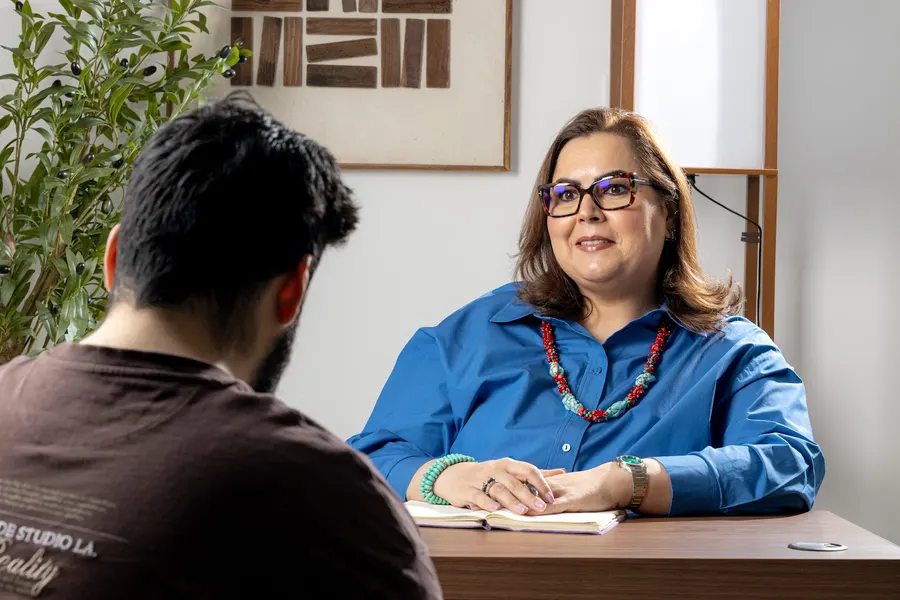
Decisions are the part of leadership nobody sees you prepare for. The bigger the role, the more of them arrive, the less time you have for each, and the fewer people can tell you whether you got it right.
I will not hand you the answer. What I do is help you see how you decide, so the next hard call costs you less than the last one.
Decision trouble rarely looks like indecision from the outside
Most leaders who come to me for decision-making coaching are seen as capable and decisive by their teams. The difficulty is internal: the hours spent replaying options, the late-night rethinking, the sense that every choice has to be perfect before it can be announced. You may recognise some of these.
- You revisit a decision you have already announced because one new piece of information appeared.
- By late afternoon you are approving things just to clear the list, or postponing everything that needs real thought.
- You ask for one more analysis, one more meeting, one more opinion, and the deadline moves again.
- You defer to the most senior voice in the room even when your own reading of the situation is different.
- In a family-owned business, you weigh every option against how it will land with relatives as well as with the business.
- You make good decisions for others but stall on the ones about your own career.
Three patterns sit under most stalled decisions
When we slow a decision down in session, one of three patterns usually appears. Naming which one is yours matters, because each needs a different response.
| Pattern | What it sounds like inside | What we work on |
|---|---|---|
| Overthinking | “If I think about it a little longer, the risk will disappear.” | Setting a decision point, defining what enough information means for this choice, and noticing the loop as it starts |
| Decision fatigue | “I can’t face another call today.” | Where your best thinking hours go, which decisions to delegate, and what drains you before the important ones; see what decision fatigue is |
| Fear of being wrong | “If this fails, it says something about me.” | Separating your identity from the outcome, and the self-critical voice that turns every choice into a test |
Deciding with incomplete information is a skill, not a gamble
Senior roles rarely offer complete data. Markets move, a regulator has not yet confirmed its position, a restructure is half announced. Waiting for certainty is itself a decision, and usually the most expensive one.
In coaching we practise a different stance. You get clear on what you know, what you are assuming and what you cannot know in time. You decide what would change your mind and set a point to review it. Then you commit and communicate, including the uncertainty. Teams often trust a leader more, not less, when they can see the reasoning.
If overthinking is the main issue, my article on how to stop overthinking decisions gives you practical steps to try before we meet.
Pressure changes how you think, so we train the moment as well as the method
Decision frameworks are useful, but most leaders already know them. What breaks down is the state they are in when the decision arrives: tired, defensive, rushed or keen to please.
This is where my mental fitness work as a Positive Intelligence® coach comes in. We identify the inner voices that hijack your judgement, such as the Controller who needs certainty or the Pleaser who needs approval, and build short habits that bring you back to a calmer, clearer place before you decide. Leadership isn’t built from the outside in; it grows from the inside out, and decision-making is no exception.
What happens in our first session
Bring one live decision
We start with a real choice in front of you now, not a hypothetical. It might be a hire, an investment, a restructure or a personal career move.
Trace how you are approaching it
I ask questions about what you have considered, who you have consulted, what you are avoiding and what you are telling yourself about the risk.
Find the pattern
Together we notice which habit is slowing you down or rushing you, and where it has shown up before.
Agree a next step
You leave with one decision point, one experiment to try before our next session, and a clearer sense of what you actually want.
My background is in watching how decisions really get made
I spent more than 26 years in leadership, HR and talent development across financial services, FMCG, entrepreneurship and government. Much of that work was alongside executive teams in growth and transformation, where I saw who was consulted, who was bypassed, and how often a delay was emotional rather than analytical.
Today I am an ICF Professional Certified Coach with more than 4,500 coaching hours. Sessions usually run weekly or every two weeks, and every engagement is personalised. Decision-making often sits alongside other goals in one-to-one executive coaching, and when the pressure itself is the main problem, resilience coaching may be the better starting point.
Frequently asked questions
Do you give an opinion on the decision itself?
No. Your context, values and accountability belong to you, and a decision you have reasoned through yourself is one you can defend and own. I ask questions that test your thinking, surface what you may have missed and help you hear your own judgement more clearly.
Can we work on a decision with a deadline next week?
Yes. A pressing decision is often the best place to start, because the pattern behind it is easy to see. We use it as live material, then look at what it teaches you about the decisions that will follow.
Is decision fatigue a sign I am in the wrong role?
Not usually. It is more often a sign that the volume and type of decisions reaching you has outgrown the way you organise your day and your team. Coaching looks at what you hold onto, what you could delegate and how you protect your thinking time.
I work in a very hierarchical organisation. Can I really decide differently?
Yes, within your real authority. Respect for seniority is part of many Gulf workplaces, and coaching does not ask you to ignore it. We work on how you form a clear view, how you present it upward and how you act on the decisions that are genuinely yours.
Can I bring commercially sensitive decisions into a session?
Yes. Strict confidentiality applies to everything you bring, including information about deals, people and restructures. That confidentiality is what makes it possible to think out loud about choices you cannot yet discuss inside the organisation.
How long does decision-making coaching usually take?
It depends on what is driving the pattern. Every engagement is personalised, so we agree the length and rhythm on a free 30-minute discovery call and review progress as we go.
Related
How to Make Better Decisions Under Pressure
How to make better decisions under pressure: sort choices by reversibility, run a five-question check, buy thinking time and avoid the traps urgency sets.
What Is Decision Fatigue?
What decision fatigue is, why leaders are especially exposed, the warning signs, what the evidence really says and practical ways to protect your judgement.
How to Stop Overthinking Decisions
How to stop overthinking decisions at work: sort decisions by stakes, use a six-step routine to break the loop, and stop second-guessing once you have chosen.
Resilience Coaching
Resilience coaching for leaders under sustained pressure: recover faster from setbacks and stay clear-headed using mental fitness tools. In person or online.
C-Suite Executive Coaching
C-suite executive coaching for CEOs and CXOs facing board pressure, decision load and isolation at the top. Strictly confidential, in Manama or online.
Clear decisions start with knowing how you decide.
Book a free 30-minute discovery call and bring the decision that is on your mind.